Download PDF

1. Company Snapshot

1.a. Company Description

Amcor plc develops, produces, and sells packaging products in Europe, North America, Latin America, Africa, and the Asia Pacific regions.The company operates through two segments, Flexibles and Rigid Packaging.The Flexibles segment provides flexible and film packaging products in the food and beverage, medical and pharmaceutical, fresh produce, snack food, personal care, and other industries.


The Rigid Packaging segment offers rigid containers for a range of beverage and food products, including carbonated soft drinks, water, juices, sports drinks, milk-based beverages, spirits and beer, sauces, dressings, spreads, and personal care items; and plastic caps for various applications.The company sells its products primarily through its direct sales force.Amcor plc was incorporated in 2018 and is headquartered in Zürich, Switzerland.

Show Full description

1.b. Last Insights on AMCR

Amcor's recent performance was driven by strong Q2 FY26 earnings, with EPS growth of 14% in H1'FY26 and a beat on Q2 earnings estimates. The company's acquisition-fueled revenue growth of 68% helped offset weak volumes and soft consumer demand. Merger synergies, expected to reach $650M over three years, contributed to the positive results, with $93M realized in H1. A compelling dividend yield of 5.4% and a defensive business model further support the company's outlook. (Source: Amcor's Q2 2026 Earnings Call Transcript, Feb 4)

1.c. Company Highlights

2. Amcor's Q2 Earnings: A Strong Step Towards Fiscal 2026 Commitments

Amcor's financial performance in the second quarter was in line with expectations, with adjusted EPS up 7% for the quarter and 14% for the first half, reaching $0.86, beating estimates of $0.83. The company's revenue growth was muted, but its adjusted EBIT margins of approximately 12% reflect a higher concentration of Advanced Solutions, improved mix within the core portfolio, and synergy benefits. The company's safety performance remained industry-leading, with a total recordable incident rate of 0.52 in Q2.

Publication Date: Feb -10

📋 Highlights
  • Berry Acquisition Synergy Progress: Achieved $55M in Q2 synergies ($93M YTD), reaffirming $650M total synergy target through 2028.
  • Earnings Growth: Adjusted EPS up 7% QoQ ($1.06) and 14% YoY ($2.14), with updated guidance of $4.20–$4.50/share post-reverse stock split.
  • Core Portfolio Strength: Volumes outperformed total portfolio by 100 bps, driving ~12% adjusted EBIT margins from Advanced Solutions mix and synergies.
  • Free Cash Flow Resilience: Generated $289M in Q2, reaffirming $1.8B–$1.9B annual guidance, with leverage at 3.6x.
  • Non-Core Business Turnaround: EBIT margin expected to improve to 7–9% in H2 (from 5% in H1) via better pricing and operational efficiency.

Synergy Progress and Expectations

The company achieved $55 million in synergies in Q2, totaling $93 million for the first half, and reaffirmed its synergy guidance for fiscal 2026, expecting at least $260 million of synergies. As Steve Scherger, Chief Financial Officer, mentioned, the company remains on track to deliver a total of $650 million of synergies through fiscal 2028. The synergies are expected to be split evenly between procurement and General and Administrative (G&A).

Segment Performance and Outlook

The company's core portfolio performed well, with volumes approximately 100 basis points better than the total combined portfolio in Q2. The rigid segment is flat, while the flexible segment is down low single digits. The company expects EBIT margins to return to 7-9% in the second half due to better contraction terms, pricing, and volume commitments in its non-core businesses.

Valuation and Growth Prospects

With a P/E Ratio of 37.62 and an EV/EBITDA of 14.18, the market is pricing in a certain level of growth. Analysts estimate next year's revenue growth at 1.6%. The company's commitment to an investment-grade credit rating, a strong balance sheet, and a modestly growing dividend annually supports its capital allocation priorities. The Dividend Yield is 5.29%, which is attractive for income investors.

Conclusion on Financial Health and Strategy

The company's strong free cash flow of $289 million for the quarter and reaffirmed free cash flow guidance of $1.8 billion to $1.9 billion demonstrate its financial health. Amcor's strategy to drive synergy capture and its commitment to putting money to work thoughtfully are expected to lead to impressive results, particularly in the fiber-based packaging segment.

3. NewsRoom

Card image cap

VYM vs. NOBL: Which Dividend-Focused ETF Delivers a Higher Yield and Lower Fees?

Feb -11

Card image cap

Amcor: A Defensive, High-Yield Dividend Aristocrat Still Trading Below Fair Value

Feb -09

Card image cap

AMCR Q2 Earnings Top Estimates, Sales Miss as Volume Decline Continues

Feb -05

Card image cap

Amcor plc (AMCR) Q2 2026 Earnings Call Transcript

Feb -04

Card image cap

Here's What Key Metrics Tell Us About Amcor (AMCR) Q2 Earnings

Feb -04

Card image cap

Amcor (AMCR) Tops Q2 Earnings Estimates

Feb -03

Card image cap

Amcor Reports Solid Second Quarter Results and Reaffirms Fiscal 2026 Guidance

Feb -03

Card image cap

Amcor Set to Report Q2 Earnings: What's in Store for the Stock?

Feb -02

4. Business Breakdown

4.a. Revenues by Country

4.b. Revenues by Segment

5. Expected revenues mid-term growth (4.67%)

6. Segments

Flexibles

Expected Growth: 4.65%

Amcor's Flexibles segment growth of 4.65% is driven by increasing demand for flexible packaging in the food and beverage industry, expansion in emerging markets, and strategic acquisitions. Additionally, the company's focus on innovation, sustainability, and customer partnerships has contributed to its growth momentum.

Rigid Packaging

Expected Growth: 4.73%

Amcor's Rigid Packaging segment growth of 4.73% is driven by increasing demand for sustainable packaging solutions, expansion in emerging markets, and strategic acquisitions. Additionally, the segment benefits from a shift towards premium and specialty packaging, as well as growth in the healthcare and pharmaceutical industries.

7. Detailed Products

Rigid Packaging

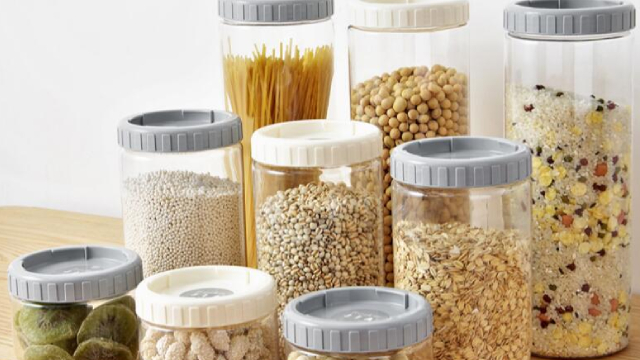
Amcor's rigid packaging products include plastic bottles, containers, and caps for the food, beverage, and pharmaceutical industries.

Flexible Packaging

Amcor's flexible packaging products include flexible films, laminates, and pouches for the food, beverage, and pharmaceutical industries.

Specialty Cartons

Amcor's specialty cartons are used for packaging of premium and specialty products, such as cosmetics, fragrances, and confectionery.

Tubing and Capsules

Amcor's tubing and capsules are used for packaging of pharmaceutical and healthcare products.

Closures

Amcor's closures include caps, lids, and closures for the food, beverage, and pharmaceutical industries.

8. Amcor plc's Porter Forces

Forces Ranking

Threat Of Substitutes

The threat of substitutes for Amcor plc is medium due to the availability of alternative packaging solutions. However, Amcor's focus on innovation and sustainability helps to differentiate its products and reduce the threat of substitutes.

Bargaining Power Of Customers

The bargaining power of customers is low for Amcor plc due to the company's strong relationships with its customers and its ability to provide customized packaging solutions.

Bargaining Power Of Suppliers

The bargaining power of suppliers is medium for Amcor plc due to the company's dependence on raw materials such as paper, plastic, and aluminum. However, Amcor's diversified supply chain and long-term contracts help to mitigate this risk.

Threat Of New Entrants

The threat of new entrants is low for Amcor plc due to the high barriers to entry in the packaging industry, including the need for significant capital investment and regulatory compliance.

Intensity Of Rivalry

The intensity of rivalry is high for Amcor plc due to the competitive nature of the packaging industry, with several large players competing for market share.

9. SWOT Analysis

10. Capital Structure

10.a. Balance Sheet

10.b. Weighted Average Cost of capital

Value
Debt Weight 62.26%
Debt Cost 4.54%
Equity Weight 37.74%
Equity Cost 8.19%
WACC 5.92%
Leverage 164.94%

11. Quality Control: Amcor plc passed 4 out of 9 key points

12.a Historical Valuation

12.b Price/Earnings Ratio

12.c Margin Valuation

12.d Peers Valuation

Peers Group Analysis

Stock-Card
Vidrala

A-Score: 5.9/10

Value: 5.6

Growth: 7.4

Quality: 7.2

Yield: 3.8

Momentum: 2.0

Volatility: 9.3

1-Year Total Return ->

Stock-Card
Viscofan

A-Score: 5.5/10

Value: 4.4

Growth: 5.1

Quality: 7.3

Yield: 6.2

Momentum: 1.0

Volatility: 8.7

1-Year Total Return ->

Stock-Card
Amcor

A-Score: 5.4/10

Value: 5.6

Growth: 3.3

Quality: 5.3

Yield: 8.8

Momentum: 1.5

Volatility: 8.0

1-Year Total Return ->

Stock-Card
Huhtamaki

A-Score: 5.2/10

Value: 6.1

Growth: 4.9

Quality: 4.1

Yield: 5.6

Momentum: 1.5

Volatility: 9.0

1-Year Total Return ->

Stock-Card
SIG

A-Score: 3.8/10

Value: 5.2

Growth: 5.3

Quality: 3.9

Yield: 5.6

Momentum: 0.0

Volatility: 3.0

1-Year Total Return ->

Stock-Card
Smurfit Kappa

A-Score: 3.2/10

Value: 2.2

Growth: 3.7

Quality: 3.0

Yield: 3.1

Momentum: 4.0

Volatility: 3.3

1-Year Total Return ->

Peers Metrics

12.e Scoring Insights

12.f DCF BETA

Parameters

Short Term Growth

Short term Time

Long-Term Growth

WACC

Target Price

50.09$

Current Price

50.09$

Potential

-0.00%

Expected Cash-Flows