Download PDF

1. Company Snapshot

1.a. Company Description

Uber Technologies, Inc.develops and operates proprietary technology applications in the United States, Canada, Latin America, Europe, the Middle East, Africa, and the Asia Pacific.It connects consumers with independent providers of ride services for ridesharing services; and connects riders and other consumers with restaurants, grocers, and other stores with delivery service providers for meal preparation, grocery, and other delivery services.


The company operates through three segments: Mobility, Delivery, and Freight.The Mobility segment provides products that connect consumers with mobility drivers who provide rides in a range of vehicles, such as cars, auto rickshaws, motorbikes, minibuses, or taxis.It also offers financial partnerships, transit, and vehicle solutions offerings.


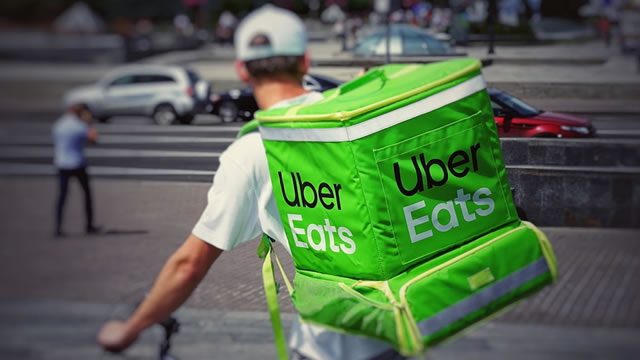
The Delivery segment allows consumers to search for and discover local restaurants, order a meal, and either pick-up at the restaurant or have the meal delivered; and offers grocery, alcohol, and convenience store delivery, as well as select other goods.The Freight segment connects carriers with shippers on the company's platform and enable carriers upfront, transparent pricing, and the ability to book a shipment, as well as transportation management and other logistics services offerings.The company was formerly known as Ubercab, Inc.


and changed its name to Uber Technologies, Inc.in February 2011.Uber Technologies, Inc.


was founded in 2009 and is headquartered in San Francisco, California.

Show Full description

1.b. Last Insights on UBER

Uber Technologies' recent performance was negatively impacted by concerns over margin expansion, despite strong Q3 growth. The company's operating income lagged EBITDA, raising investor concerns. Autonomous vehicle uncertainty and softer Q4 guidance also contributed to the decline. Additionally, a cautious outlook and potential disruption from driverless car technology have investors betting on the company's ability to adapt. A hold rating was assigned, citing fair value at $99 per share.

1.c. Company Highlights

2. Uber's Q3 2025 Earnings: A Strong Performance

Uber reported a robust financial performance in Q3 2025, with a significant beat on EPS, coming in at $3.11 compared to estimates of $0.69. The company's revenue growth was driven by a 22% increase in trips, the fastest growth since 2023, resulting in a 21% growth in gross bookings. This translated into a record adjusted EBITDA and free cash flow, with EBITDA growing 33% year-over-year to an all-time high margin of 4.5% of Gross Bookings. The company's sparse geography strategy is paying off, with sparse geographies growing at about 1.5 times the rate of denser markets.

Publication Date: Nov -05

📋 Highlights
  • Q3 Performance Growth:: Trips surged 22% YoY (fastest since 2023), mobility trips up 21%, gross bookings rose 21%, and adjusted EBITDA, free cash flow hit records.
  • AV Strategic Partnership:: Collaborated with Nvidia to develop L4-ready autonomous vehicle reference architecture, enhancing data quality through real-world sensor stack scaling.
  • AV Market Outperformance:: Autonomous vehicle operations in Austin and Atlanta grew faster than other U.S. markets, with healthy driver earnings in these regions.
  • Sparse Geography Strategy:: Sparse markets expanded 1.5x faster than dense ones, driving EBITDA growth of 33% YoY (4.5% margin of Gross Bookings).
  • Uber One Expansion:: 36 million members (healthy growth rate) with 6% cashback benefits, supporting cross-platform engagement and geographic diversification.

Segment Performance

The mobility segment drove growth, with the audience reaching 150 million users, an all-time high, driven by investments in product innovation. The company attributes growth to expanding its audience and product portfolio. In the delivery segment, the business has accelerated, with a 4-point acceleration in growth, driven by investments in product improvements on the grocery and retail side. The company is confident in its leading position in Europe and is focused on expanding merchant selection and improving user experience.

Strategic Initiatives

Uber's CEO, Dara Khosrowshahi, outlined six strategic areas of focus, including deepening engagement across the platform, building a hybrid future with human drivers and autonomous vehicles, and investing in local commerce. The company has defined a partnership with Nvidia to create a reference architecture for L4-ready autonomous vehicles. The company is also investing in cross-platform and membership, including Uber One, which has 36 million members and is growing at a healthy rate.

Valuation and Outlook

With a P/E Ratio of 11.86 and an EV/EBITDA of 25.05, the market is pricing in a certain level of growth. Uber expects mid-to-high teens Gross Bookings growth and high 30-40% EBITDA CAGR in the next few years. Analysts estimate next year's revenue growth at 15.4%. The company's strong performance and growth prospects, combined with its improving profitability, make it an attractive investment opportunity. The company's shift to an adjusted EPS model and its focus on driving growth and profitability while investing in new initiatives are positive developments.

3. NewsRoom

Card image cap

Options Corner: Why Uber Technologies Stock's Risk Geometry Backs A More Aggressive Trade

Dec -04

Card image cap

Uber Launches Robotaxi Service in Dallas: Growth Story Hotting up?

Dec -04

Card image cap

Uber says one stat shows how much room the company has to grow in the US

Dec -04

Card image cap

Uber Technologies (NYSE:UBER) Shares Up 3.5% Following Analyst Upgrade

Dec -04

Card image cap

Uber: Consistent Execution And Long Term Opportunities

Dec -04

Card image cap

Uber Stock Gains. A Big Reason Is Self-Driving Cars.

Dec -03

Card image cap

Uber Shares Rise as Robotaxi Service Launches in Dallas

Dec -03

Card image cap

Uber Technologies, Inc. (UBER) Presents at UBS Global Technology and AI Conference 2025 Transcript

Dec -03

4. Business Breakdown

4.a. Revenues by Country

4.b. Revenues by Segment

5. Expected revenues mid-term growth (18.80%)

6. Segments

Mobility

Expected Growth: 21.3%

Ride-hailing demand driven by urbanization, increasing smartphone penetration, and growing demand for convenient transportation alternatives fueled Uber’s growth.

Delivery

Expected Growth: 12.4%

Strong demand for convenience and increasing adoption of online food ordering drive growth. Uber Eats’ expanding global footprint, enhanced user experience, and strategic partnerships with restaurants and food establishments further fuel growth.

Freight

Expected Growth: 23.7%

Uber Freight's growth is driven by increasing demand for digital freight brokerage, the company's ability to leverage its existing network and technology, and the need for shippers to optimize their logistics operations.

7. Detailed Products

Uber Rides

A ride-hailing service that connects riders with drivers using their personal vehicles.

Uber Eats

A food delivery and ordering service that partners with local restaurants to deliver food to customers.

Uber Freight

A logistics service that connects shippers with carriers to move goods.

Uber for Business

A platform that allows companies to manage employee transportation and expenses.

Uber Health

A non-emergency medical transportation service that helps patients get to appointments.

Uber Works

A platform that connects workers with businesses that need temporary or seasonal labor.

Uber Air

An on-demand air taxi service that uses electric vertical takeoff and landing (eVTOL) aircraft.

8. Uber Technologies, Inc.'s Porter Forces

Forces Ranking

Threat Of Substitutes

Uber's services are unique and there are no close substitutes, making it difficult for customers to switch to alternative modes of transportation.

Bargaining Power Of Customers

Customers have some bargaining power due to the availability of alternative ride-hailing services, but Uber's strong brand and large user base mitigate this power.

Bargaining Power Of Suppliers

Suppliers (drivers) have limited bargaining power due to the abundance of drivers and the ease of switching to alternative platforms.

Threat Of New Entrants

The threat of new entrants is high due to the low barriers to entry and the attractiveness of the ride-hailing market, making it easy for new competitors to emerge.

Intensity Of Rivalry

The intensity of rivalry is high due to the presence of strong competitors like Lyft, Via, and Juno, which creates a highly competitive market.

9. SWOT Analysis

10. Capital Structure

10.a. Balance Sheet

10.b. Weighted Average Cost of capital

Value
Debt Weight 46.96%
Debt Cost 5.89%
Equity Weight 53.04%
Equity Cost 10.84%
WACC 8.52%
Leverage 88.52%

11. Quality Control: Uber Technologies, Inc. passed 3 out of 9 key points

12.a Historical Valuation

12.b Price/Earnings Ratio

12.c Margin Valuation

12.d Peers Valuation

Peers Group Analysis

Stock-Card
Uber

A-Score: 5.4/10

Value: 2.6

Growth: 9.2

Quality: 7.6

Yield: 0.0

Momentum: 6.5

Volatility: 6.3

1-Year Total Return ->

Stock-Card
ANSYS

A-Score: 5.3/10

Value: 0.7

Growth: 6.3

Quality: 8.5

Yield: 0.0

Momentum: 6.5

Volatility: 9.7

1-Year Total Return ->

Stock-Card
Autodesk

A-Score: 5.1/10

Value: 0.5

Growth: 7.3

Quality: 8.1

Yield: 0.0

Momentum: 6.5

Volatility: 8.0

1-Year Total Return ->

Stock-Card
Salesforce

A-Score: 5.0/10

Value: 2.2

Growth: 8.9

Quality: 8.4

Yield: 1.0

Momentum: 2.5

Volatility: 7.0

1-Year Total Return ->

Stock-Card
AppLovin

A-Score: 4.9/10

Value: 0.0

Growth: 9.7

Quality: 8.0

Yield: 0.0

Momentum: 10.0

Volatility: 1.7

1-Year Total Return ->

Stock-Card
Workday

A-Score: 4.3/10

Value: 1.0

Growth: 8.4

Quality: 6.2

Yield: 0.0

Momentum: 4.0

Volatility: 6.3

1-Year Total Return ->

Peers Metrics

12.e Scoring Insights

12.f DCF BETA

Parameters

Short Term Growth

Short term Time

Long-Term Growth

WACC

Target Price

91.32$

Current Price

91.32$

Potential

-0.00%

Expected Cash-Flows