Download PDF

1. Company Snapshot

1.a. Company Description

Carvana Co., together with its subsidiaries, operates an e-commerce platform for buying and selling used cars in the United States.The company's platform allows customers to research and identify a vehicle; inspect it using company's 360-degree vehicle imaging technology; obtain financing and warranty coverage; purchase the vehicle; and schedule delivery or pick-up from their desktop or mobile devices.Carvana Co. was founded in 2012 and is headquartered in Tempe, Arizona.

Show Full description

1.b. Last Insights on CVNA

Breaking News: Carvana Co has been given a consensus rating of Moderate Buy by twenty five brokerages covering the stock. Eighteen have assigned a buy recommendation, six a hold recommendation, and one a strong buy recommendation. Jefferies reiterated its bullish stance citing strong unit growth and improving pricing trends, maintaining a Buy rating with a $485 price target. However, The Portnoy Law Firm has initiated an investigation into possible securities fraud.

1.c. Company Highlights

2. Carvana's Stellar Earnings: A Deeper Dive

Carvana's financial performance in 2025 was impressive, with revenues reaching $5.603 billion in Q4, a 58% increase year-over-year, driven by a 43% growth in retail units sold to 163,522. The company's adjusted EBITDA margin was a record 11%. Earnings per share (EPS) came in at $4.22, significantly beating estimates of $1.14. The company's strong balance sheet, with $2.3 billion in cash and equivalents, and a reduced net debt to trailing 12-month adjusted EBITDA ratio to 1.3x, underscores its financial health.

Publication Date: Feb -20

📋 Highlights
  • 43% Retail Units Growth: Carvana sold 596,641 retail units in 2025, up 43% year-over-year, with Q4 units at 163,522.
  • 11% Adjusted EBITDA Margin: The company achieved a record margin, driven by cost reductions and operational efficiency.
  • $4 Billion Loan Sale Expansion: New loan purchase agreements expanded capacity, with net debt reduced to 1.3x trailing EBITDA.
  • $220/Car Reconditioning Automation Benefit: AI and process improvements aim to unlock this savings if all locations reach top quartile performance.
  • 30% AI-Driven Customer Experience: 30% of customers use AI tools like Sebastian, avoiding human interaction until receiving the car, enhancing efficiency.

Operational Highlights

Carvana's operational performance was equally impressive, with the company highlighting significant improvements in customer selection, faster car delivery, and reduced interest rates for customers. The company's CEO, Ernie Garcia, noted that the team has done an "incredible job" in scaling the reconditioning operations, but there are opportunities to improve performance, particularly in newer locations. The company aims to make the management of reconditioning processes more automated, which could lead to a $220 benefit per car if all locations reach the top quartile.

Growth Prospects

For 2026, Carvana expects significant growth in both retail units sold and adjusted EBITDA, with a sequential increase in both metrics in Q1 2026. The company's guidance implies at least 22% growth in Q1, driven by its focus on delivering great customer experiences and making its system more efficient. Analysts estimate revenue growth at 23.8% for next year, indicating a strong outlook for the company.

Valuation Metrics

Carvana's valuation metrics provide insight into what's priced in. The company's P/E Ratio is 33.53, indicating a relatively high valuation. However, its EV/EBITDA ratio is 56.14, suggesting that the market is pricing in significant growth. The company's ROE is 62.85%, indicating strong profitability. With a Net Debt / EBITDA ratio of -0.86, Carvana's financial health is robust.

Key Takeaways

Carvana's strong financial performance, operational improvements, and growth prospects make it an attractive investment opportunity. While the company's valuation is relatively high, its growth prospects and robust financial health suggest that it may be well-positioned for long-term success. As Ernie Garcia noted, "as long as we build the operational chain to support volume, there's demand for that volume," indicating a strong outlook for the company's future growth.

3. NewsRoom

Card image cap

3 Monster Stocks to Hold for the Next 10 Years

Apr -02

Card image cap

Carvana surges as Jefferies flags strong unit growth, pricing momentum

Mar -31

Card image cap

Carvana surges as Jefferies flags strong unit growth, pricing momentum

Mar -31

Card image cap

Carvana Co. Investigated by the Portnoy Law Firm

Mar -31

Card image cap

Carvana Co. (NYSE:CVNA) Given Average Rating of “Moderate Buy” by Analysts

Mar -31

Card image cap

Why is Carvana's stock split announcement being treated as bearish?

Mar -30

Card image cap

Stocks Higher as Trump Pressures Iran on Peace Deal

Mar -30

Card image cap

Carvana Slumps 8%: 3 Reasons Bears Are Gaining the Upper Hand in This Battleground Stock

Mar -30

4. Business Breakdown

4.a. Revenues by Country

4.b. Revenues by Segment

5. Expected revenues mid-term growth (10.40%)

6. Segments

Retail Vehicle

Expected Growth: 10%

Carvana Co.'s 10% retail vehicle growth is driven by increasing online car buying adoption, expanding geographic presence, and a user-friendly e-commerce platform. Additionally, the company's 7-day return policy, free delivery, and competitive pricing contribute to its growth. Furthermore, Carvana's data analytics capabilities and strategic partnerships with lenders and dealerships also support its expansion.

Wholesale Vehicle

Expected Growth: 12%

Carvana's 12% wholesale vehicle growth is driven by increasing demand for used cars, expansion of its vending machine network, and strategic partnerships with dealerships and fleets. Additionally, the company's proprietary technology and data analytics capabilities enable it to efficiently source and price vehicles, further fueling growth.

Other

Expected Growth: 9%

Carvana's 9% growth in 'Other' segment is driven by increasing adoption of its vehicle subscription service, Carvana Flex, and expansion of its commercial solutions, including partnerships with fleet operators and rental car companies, which leverage its proprietary technology and logistics network.

7. Detailed Products

Used Cars

Carvana offers a wide selection of used cars from various manufacturers, with a focus on providing a transparent and hassle-free buying experience.

Certified Pre-Owned (CPO) Vehicles

Carvana's certified pre-owned vehicles have undergone a rigorous inspection process and come with warranties, providing customers with added peace of mind.

Car Vending Machines

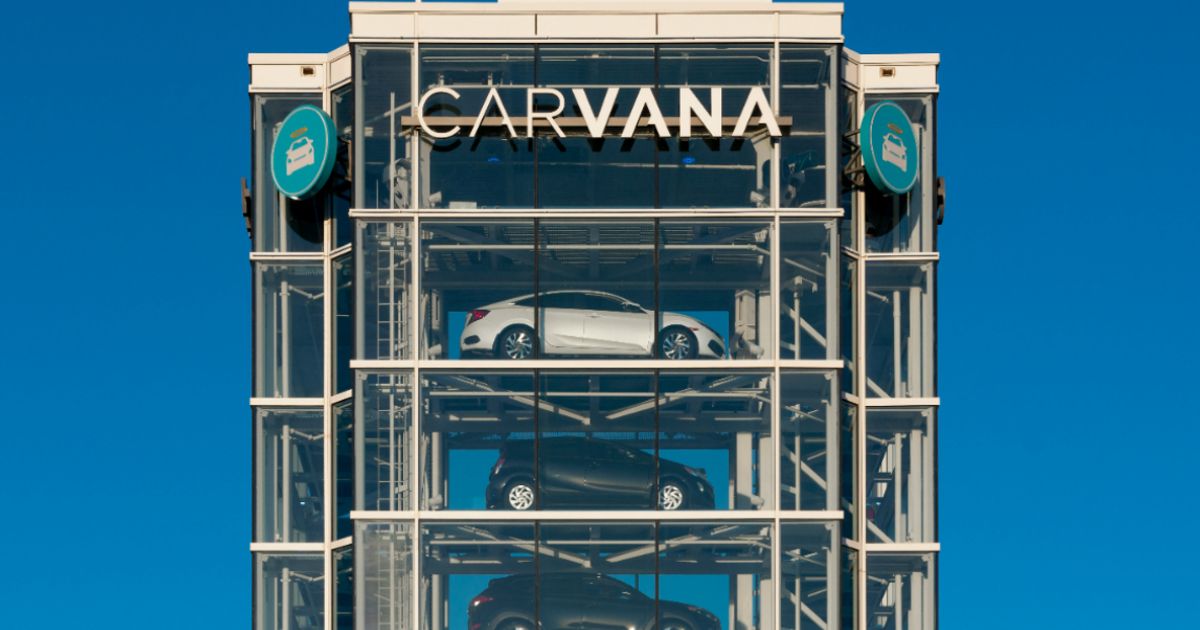
Carvana's car vending machines are multi-story glass towers that store vehicles, allowing customers to pick up their purchased cars in a unique and memorable way.

Financing and Insurance

Carvana offers financing options and insurance products to help customers complete their car-buying journey, making it a one-stop-shop.

Trade-In and Sell

Carvana allows customers to trade-in their existing vehicles or sell them directly to the company, providing a convenient way to upgrade or get cash for their car.

8. Carvana Co.'s Porter Forces

Forces Ranking

Threat Of Substitutes

Carvana's business model is highly dependent on its online platform, which makes it vulnerable to substitutes. However, the company's focus on customer experience and convenience helps to mitigate this threat.

Bargaining Power Of Customers

Carvana's customers have limited bargaining power due to the company's unique business model and lack of direct competition. This gives Carvana an upper hand in negotiating prices and terms.

Bargaining Power Of Suppliers

Carvana relies on a network of suppliers for its inventory, which gives them some bargaining power. However, the company's scale and growth prospects help to mitigate this threat.

Threat Of New Entrants

The used car market is highly competitive, and new entrants could potentially disrupt Carvana's business model. However, the company's strong brand and established logistics network provide a barrier to entry.

Intensity Of Rivalry

The used car market is highly competitive, with many established players. Carvana's unique business model and focus on customer experience help to differentiate it from competitors, but the company still faces intense rivalry.

9. SWOT Analysis

10. Capital Structure

10.a. Balance Sheet

10.b. Weighted Average Cost of capital

Value
Debt Weight 96.50%
Debt Cost 11.00%
Equity Weight 3.50%
Equity Cost 20.37%
WACC 11.32%
Leverage 2759.67%

11. Quality Control: Carvana Co. passed 5 out of 9 key points

12.a Historical Valuation

12.b Price/Earnings Ratio

12.c Margin Valuation

12.d Peers Valuation

Peers Group Analysis

Stock-Card
Ulta Beauty

A-Score: 5.3/10

Value: 2.9

Growth: 7.7

Quality: 6.3

Yield: 0.0

Momentum: 9.0

Volatility: 6.0

1-Year Total Return ->

Stock-Card
Etsy

A-Score: 5.3/10

Value: 7.0

Growth: 7.8

Quality: 7.1

Yield: 0.0

Momentum: 6.0

Volatility: 3.7

1-Year Total Return ->

Stock-Card
Advance Auto Parts

A-Score: 5.0/10

Value: 9.4

Growth: 1.4

Quality: 4.1

Yield: 5.0

Momentum: 8.0

Volatility: 2.3

1-Year Total Return ->

Stock-Card
Wayfair

A-Score: 4.3/10

Value: 5.7

Growth: 4.6

Quality: 4.0

Yield: 0.0

Momentum: 9.5

Volatility: 2.3

1-Year Total Return ->

Stock-Card
Carvana

A-Score: 4.0/10

Value: 0.4

Growth: 7.4

Quality: 6.4

Yield: 0.0

Momentum: 8.0

Volatility: 1.7

1-Year Total Return ->

Stock-Card
RH

A-Score: 2.2/10

Value: 3.8

Growth: 2.9

Quality: 3.4

Yield: 0.0

Momentum: 1.0

Volatility: 2.0

1-Year Total Return ->

Peers Metrics

12.e Scoring Insights

12.f DCF BETA

Parameters

Short Term Growth

Short term Time

Long-Term Growth

WACC

Target Price

313.55$

Current Price

313.55$

Potential

-0.00%

Expected Cash-Flows