Download PDF

1. Company Snapshot

1.a. Company Description

Tesla, Inc.designs, develops, manufactures, leases, and sells electric vehicles, and energy generation and storage systems in the United States, China, and internationally.It operates in two segments, Automotive, and Energy Generation and Storage.


The Automotive segment offers electric vehicles, as well as sells automotive regulatory credits; and non-warranty after-sales vehicle, used vehicles, retail merchandise, and vehicle insurance services.This segment also provides sedans and sport utility vehicles through direct and used vehicle sales, a network of Tesla Superchargers, and in-app upgrades; purchase financing and leasing services; services for electric vehicles through its company-owned service locations and Tesla mobile service technicians; and vehicle limited warranties and extended service plans.The Energy Generation and Storage segment engages in the design, manufacture, installation, sale, and leasing of solar energy generation and energy storage products, and related services to residential, commercial, and industrial customers and utilities through its website, stores, and galleries, as well as through a network of channel partners; and provision of service and repairs to its energy product customers, including under warranty, as well as various financing options to its solar customers.


The company was formerly known as Tesla Motors, Inc.and changed its name to Tesla, Inc.in February 2017.


Tesla, Inc.was incorporated in 2003 and is headquartered in Austin, Texas.

Show Full description

1.b. Last Insights on TSLA

Tesla's recent performance is driven by robust sales, margin resilience, and global expansion. The company delivered a record quarter with a significant sales beat, 18% gross margin, and growing non-automotive revenue streams like energy, FSD potential, and future AI prospects. Analysts cite optimism over its Full Self-Driving (FSD) technology and progress on the robotaxi platform. A bullish outlook from Wall Street highlights the company's advances in autonomous driving. Diversified business model, including energy storage and autonomous robotaxis, positions Tesla for growth.

1.c. Company Highlights

2. Tesla's Q3 2025 Earnings: A Record-Breaking Quarter

Tesla's third-quarter 2025 results were nothing short of impressive, with the company reporting record deliveries, deployments, and financial metrics. Total revenues came in strong, driven by a 29% increase in automotive revenues, which benefited from growth in deliveries. Automotive margins, excluding credits, rose marginally to 15.4%. The energy storage business also had a standout quarter, with record deployments, gross profit, and margins. Tesla's total cash and investments stood at over $41 billion, with free cash flow reaching approximately $4 billion. The company's actual EPS came in at $0.5, slightly below estimates of $0.558.

Publication Date: Oct -23

📋 Highlights
  • Record Financial Performance:: Tesla achieved new highs in Q3 2025 with $4B free cash flow, $41B total cash, and 29% growth in automotive revenue driven by 15.4% margins.
  • Energy Storage Momentum:: Deployments and gross profit reached records despite $400M tariff impacts, with Megapack 4 and 5 upgrades planned to enhance deployment efficiency.
  • AI-Driven Inflection Point:: Full Self-Driving (FSD) and robotaxi progress includes 250K+ miles in Austin without safety drivers and plans to expand to 8-10 metro areas by year-end.
  • Optimus Robot Scale-Up:: Tesla aims to produce 10 million Optimus units by 2027, with B3 version unveiling in Q1 2026 and potential $5/year productivity per robot over humans.
  • AI Chip Breakthrough:: Samsung-TSMC collaboration targets AI5 chips 40x faster than AI4, with $16.5B investment to secure semiconductor supply for cars, robots, and data centers.

Financial Performance

The company's financial performance was a highlight of the quarter, with total revenues, energy gross profit, and free cash flow all setting new records. The energy storage business continues to be a bright spot, with record deployments and margins. Tesla's automotive revenues increased 29% due to growth in deliveries, with margins, excluding credits, rising marginally to 15.4%. As Elon Musk noted, "Tesla is a leader in real-world AI, with millions of cars on the road that can become full self-driving cars with a software update."

Valuation Metrics

With Tesla's current valuation metrics, it's clear that the market is pricing in significant growth expectations. The company's P/E Ratio stands at 266.77, while the P/S Ratio is 14.8. The EV/EBITDA ratio is 121.27, indicating that the market is expecting strong earnings growth in the future. Analysts estimate next year's revenue growth at 17.1%, which may be challenging to achieve given the current valuation multiples.

Robotaxi and Autonomous Driving

Tesla is making significant strides in autonomous driving, with plans to operate robotaxi in eight to ten metro areas by the end of the year. The company has already achieved impressive metrics, with over a quarter million miles covered in Austin without safety drivers and over a million miles in the Bay Area with a person in the driver's seat. Tesla's FSD 14 software has a new architecture prioritizing safety, with comfort issues to be addressed in later versions.

Optimus Robot Project

The Optimus robot project is progressing well, with plans to unveil Optimus B3 in Q1. Elon Musk believes that Optimus has the potential to be the biggest product of all time, with applications in various industries, including healthcare. The company is working towards a future of sustainable abundance, where technology can help eradicate poverty and provide access to quality healthcare.

Growth Prospects

Tesla's growth prospects are closely tied to its AI and autonomous driving initiatives. The company is well-positioned to capitalize on the growing demand for AI-driven technologies, with its Megapack product being sought after by hyperscalers and utilities. With a strong product lineup and a commitment to innovation, Tesla is poised for long-term success.

3. NewsRoom

Card image cap

Market Today: WBD Sale Bids, Meta Cuts, Apple Shake-Up

Dec -04

Card image cap

Stocks to Watch as the AI-Driven Robotics Productivity Push Accelerates

Dec -04

Card image cap

Tesla is the only Big Tech stock without a new high this year — but it's getting closer

Dec -04

Card image cap

Tesla stock trades in the green: is this the start of a December bounce?

Dec -04

Card image cap

Tesla Stock: Bullish Bet On Price Gain Could Return 40% In Weeks

Dec -04

Card image cap

Tesla Stock Is Climbing -- Optimus Robot Hopes and Federal Support Talks

Dec -04

Card image cap

Initial Jobless Claims Shocker; Small Caps Move On Rate Cut Prospects; 10–20% Correction Risk to AI Trade

Dec -04

Card image cap

The 3 Stocks I'm Watching for Clues About a Potential Sentiment Shift in the Market in 2026

Dec -04

4. Business Breakdown

4.a. Revenues by Country

4.b. Revenues by Segment

5. Expected revenues mid-term growth (15.40%)

6. Segments

Automotive

Expected Growth: 15.4%

Increasing adoption of electric vehicles driven by government regulations, declining battery costs, and growing consumer demand for sustainable energy solutions, supported by Tesla's continuous innovation and expansion in the automotive segment.

Energy Generation and Storage

Expected Growth: 15.4%

Tesla's energy generation and storage segment is driven by increasing adoption of renewable energy sources and energy storage systems. Growing demand for sustainable energy solutions, declining solar panel costs, and government incentives will fuel segment growth.

7. Detailed Products

Electric Vehicles (EVs)

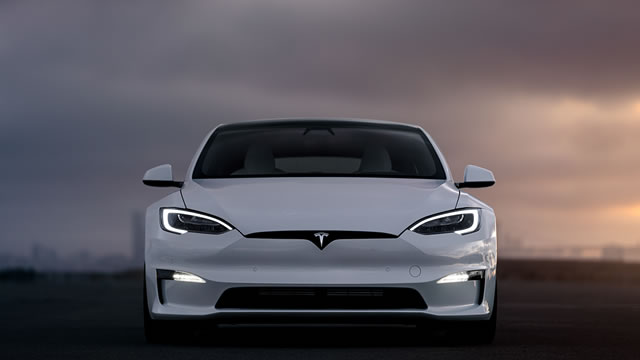
Tesla's electric vehicles are designed to provide sustainable energy solutions for transportation. They offer a range of models, including the Model S, Model 3, Model X, Model Y, and the upcoming Cybertruck.

Solar Panels and Solar Roof

Tesla's solar energy products allow homeowners and businesses to generate their own renewable energy. The solar panels and solar roof tiles are designed to integrate with Tesla's energy storage products.

Powerwall

The Powerwall is a home energy storage system that allows users to store excess energy generated by their solar panels or the grid for use during power outages or at night.

Tesla Energy Storage (Megapack)

The Megapack is a large-scale energy storage system designed for commercial and industrial applications. It can be used to store excess energy generated by renewable sources or to provide grid stability.

Autopilot and Full Self-Driving Capability (FSD)

Tesla's Autopilot and FSD are advanced driver-assistance systems (ADAS) designed to enable semi-autonomous and fully autonomous driving capabilities.

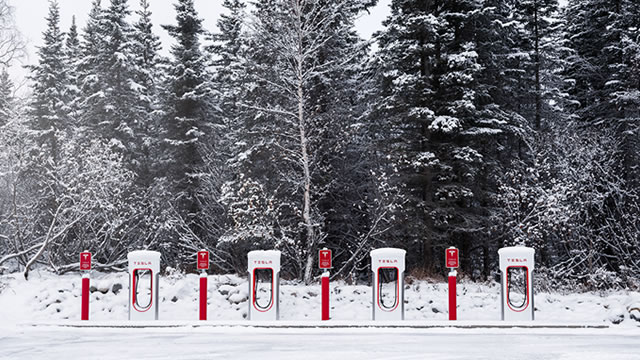
Tesla Charging Network (Supercharger and Destination Charging)

Tesla's charging network provides fast and convenient charging solutions for Tesla owners on the go.

8. Tesla, Inc.'s Porter Forces

Forces Ranking

Threat Of Substitutes

Tesla's electric vehicles (EVs) have a unique value proposition, and the company's charging network provides a convenience that gasoline-powered vehicles cannot match. While there are substitute products, such as gasoline-powered vehicles, hybrids, and other EV manufacturers, Tesla's brand loyalty and technological advancements make substitutes less attractive to customers.

Bargaining Power Of Customers

Tesla's customers are generally loyal and enthusiastic about the brand. However, the company faces competition from other EV manufacturers, and customers have some bargaining power due to the availability of alternative products. Additionally, Tesla's direct-to-consumer sales model and online platform provide customers with more control over their purchasing experience.

Bargaining Power Of Suppliers

Tesla has a diversified supply chain and has made efforts to reduce its dependence on specific suppliers. The company also has significant negotiating power due to its large order volumes and long-term contracts. Furthermore, Tesla has been investing in vertical integration, such as acquiring SolarCity and developing its own battery production.

Threat Of New Entrants

The EV market is growing rapidly, and new entrants are emerging. However, Tesla has a significant first-mover advantage, a strong brand, and a well-established distribution network. New entrants would need to invest heavily in technology, marketing, and distribution to compete effectively with Tesla.

Intensity Of Rivalry

The EV market is highly competitive, with established automakers and new entrants vying for market share. Tesla faces intense competition from companies like General Motors, Volkswagen, and NIO, which have significant resources and capabilities. The competition is expected to intensify as more companies enter the market and governments implement stricter emissions regulations.

9. SWOT Analysis

10. Capital Structure

10.a. Balance Sheet

10.b. Weighted Average Cost of capital

Value
Debt Weight 15.74%
Debt Cost 4.39%
Equity Weight 84.26%
Equity Cost 15.40%
WACC 13.67%
Leverage 18.68%

11. Quality Control: Tesla, Inc. passed 6 out of 9 key points

12.a Historical Valuation

12.b Price/Earnings Ratio

12.c Margin Valuation

12.d Peers Valuation

Peers Group Analysis

Stock-Card
Ford

A-Score: 5.9/10

Value: 7.3

Growth: 4.7

Quality: 2.5

Yield: 8.0

Momentum: 6.5

Volatility: 6.3

1-Year Total Return ->

Stock-Card
Royal Caribbean Cruises

A-Score: 5.1/10

Value: 2.5

Growth: 6.9

Quality: 6.2

Yield: 1.0

Momentum: 8.5

Volatility: 5.3

1-Year Total Return ->

Stock-Card
General Motors

A-Score: 4.8/10

Value: 5.9

Growth: 6.3

Quality: 2.5

Yield: 1.0

Momentum: 7.5

Volatility: 5.7

1-Year Total Return ->

Stock-Card
Las Vegas Sands

A-Score: 4.4/10

Value: 2.2

Growth: 5.1

Quality: 5.2

Yield: 2.0

Momentum: 6.0

Volatility: 5.7

1-Year Total Return ->

Stock-Card
Tesla

A-Score: 4.3/10

Value: 0.0

Growth: 8.7

Quality: 5.2

Yield: 0.0

Momentum: 9.5

Volatility: 2.3

1-Year Total Return ->

Stock-Card
Nike

A-Score: 4.2/10

Value: 2.0

Growth: 3.9

Quality: 6.1

Yield: 4.0

Momentum: 4.0

Volatility: 5.3

1-Year Total Return ->

Peers Metrics

12.e Scoring Insights

12.f DCF BETA

Parameters

Short Term Growth

Short term Time

Long-Term Growth

WACC

Target Price

455.0$

Current Price

455$

Potential

-0.00%

Expected Cash-Flows